

Greek vs Caesar vs Very Berry: Which Salad Fits Your Day?
A salad is suitable for any occasion; seasoned with salsa, it can be an entrée; with sauce, it can be a side; and, without sauce, it can be a quick snack until the next break from work. What Greek salad, Caesar salad, and Very Berry salad, for instance, have in common is that they can look uncomplicated but truly serve vastly different functions.
There are days when the combination of salt and crunch is what the occasion calls for, while at other times, a combination of cream and comfort is the preference. And, there are just those instances when a light and easy-to-consume salad with some fresh and fruity elements is the thing to go for.
In addition to explaining the circumstances of each salad, the content below will describe each recipe, its components, its taste, and the time of day it best suits. It will also include indications on when to add protein and when to convert the salad to a bowl.
Greek Salad
In the Greek salad, also referred to as the village salad, there is the absence of both a lettuce base and a salad dressing. It is fully reliant on the veggies.
A classic Greek salad includes:
Tomatoes, cut into bite-sized pieces
Cucumber, sliced and kept crisp in cold water before serving
Red onion, thinly sliced
Green bell pepper or bell pepper for crunch
Pitted Kalamata olives or whole Kalamata olives
Blocks of feta cheese or crumbled feta
Extra virgin olive oil
Red wine vinegar, lime juice, or lemon juice
Dried oregano, salt, and black pepper
This simple Greek salad follows the principles of the Mediterranean diet: fresh vegetables, olive oil, and cheese in moderation. There’s no creamy dressing, no sugar, and no filler ingredients.
Why Greek salad works
Light but satisfying
Salty, fresh, and clean
Lower in calories than creamy salads
Easy to digest
It’s a great option for a side item, a light lunch, or a refreshing dish on a warm day. When following a Greek salad recipe and making it yourself, it’s best served in a large salad bowl, and right before serving, gently tossed with some olive oil and vinegar.
Greek salad should be fresh with no overdressing. If you’re enjoying it out, it’s great on its own, or with grilled protein for a complete dish while keeping it on the lighter side.
Caesar Salad
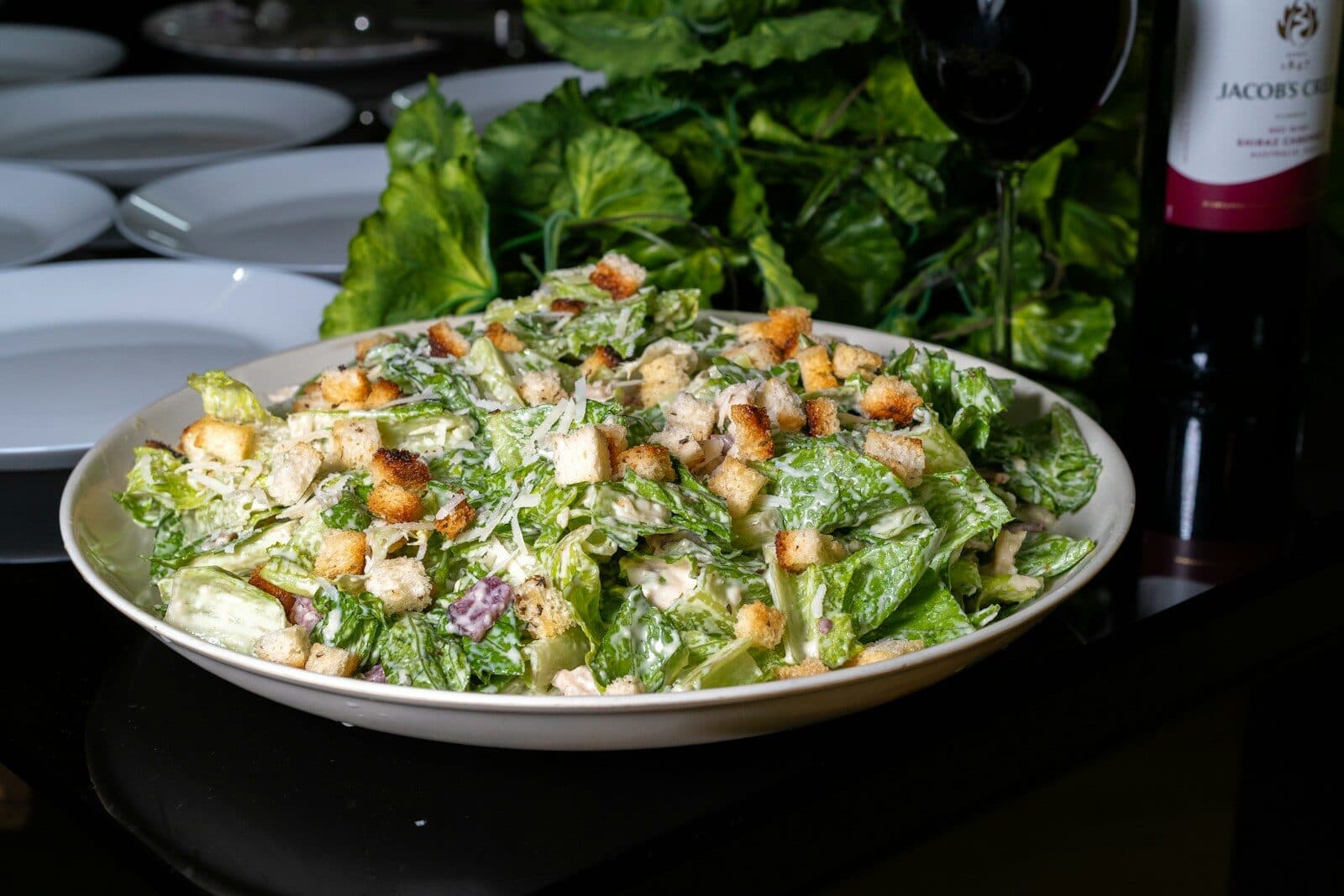
Caesar salad, on the other hand, is the complete opposite of Greek salad. While Greek salad is light, Caesar salad is a comforting salad.
To begin with, a classic Caesar salad consists of a base ingredient of torn, not chopped, lettuce. Secondly, the essence of a classic Caesar salad is introduced: Caesar salad dressing. It is creamy, salty, but most importantly, it is delicious.
The truth of the matter is that the trick to having an excellent Caesar salad is to mix the dressing with the croutons and romaine lettuce. If there is an excess of dressing, it ends up overpowering the salad. Conversely, when there is not enough dressing, it ends up drying the salad.
This is the salad that the customer would order if they wanted a filling dish, but not if they ordered a pasta salad or potato salad.
A classic Caesar salad dressing usually includes:
Raw egg yolk
Dijon mustard
Minced garlic
Anchovies or anchovy paste
Worcestershire sauce
Lemon juice or sometimes lime juice
Olive oil or garlic-infused oil
Black pepper and salt
When making a homemade Caesar salad, the dressing is made by whisking constantly until the oil emulsifies and reaches the desired consistency. Some recipes call for more dressing, others keep it lighter—it’s a matter of taste.
The salad is finished with:
Grated parmesan cheese or freshly grated parmesan cheese
Crunchy croutons, often baked on a baking sheet
Optional grilled chicken or shrimp
Why Caesar salad works
Feels filling and familiar
Rich, savoury flavour
Works as a full meal
Great when you want a “comfort salad.”
A good Caesar salad recipe requires the correct balance of the creamy dressing and the crunchy lettuce and croutons. Too much dressing will make the salad soggy, while too little will leave the salad dry.
This salad is what the customers would order if they had the desire for a fulfilling meal without feeling the need to go for either pasta salad or potato salad.
Very Berry Salad
The Very Berry salad is a great choice when you want something lighter. There are no cheese, no anchovies, and no heavy dressings. It is built around freshness, and of course, natural sweetness.
This salad recipe typically includes:
Mixed greens or lettuce
Fresh berries
A light dressing made with olive oil, vinegar, or citrus
Optional nuts or seeds
Unlike Caesar or Greek salad, this one is about contrast—sweet fruit, light acidity, and a clean finish.
Best moments for a Very Berry salad
Brunch
Hot summer days
Light mid-morning meals
When you’re not very hungry
It works well in a small bowl and is often eaten as a standalone salad rather than a full meal. Because it’s lighter, it doesn’t need heavy protein unless you want to make it more filling.
Add Protein to Any Salad
Any salad can become a proper meal with the right protein.
Popular options include:
Chicken
Shrimp
Protein helps slow digestion and keeps you full longer. If you’re ordering a side salad but want it to hold you through a long afternoon, adding protein is usually enough.
When to Switch to a Bowl Instead
There are days when salad just isn’t enough—no matter how good the salad ingredients are.
Switch to a bowl if:
You trained or exercised
You skipped breakfast
You need more carbs
You want sustained energy
Bowls offer more volume and structure, while salads stay light and flexible.
How to Store and Serve Salad (If You’re Making It at Home)
If you’re following a recipe at home:
Store leftover dressing in an airtight container
Keep lettuce dry to stay crisp
Add dressing just before serving
Always toss gently
If you’re posting or sharing recipes, don’t forget to review recipe, add required recipe ratings, or comment something helpful for others trying to follow recipe steps.